

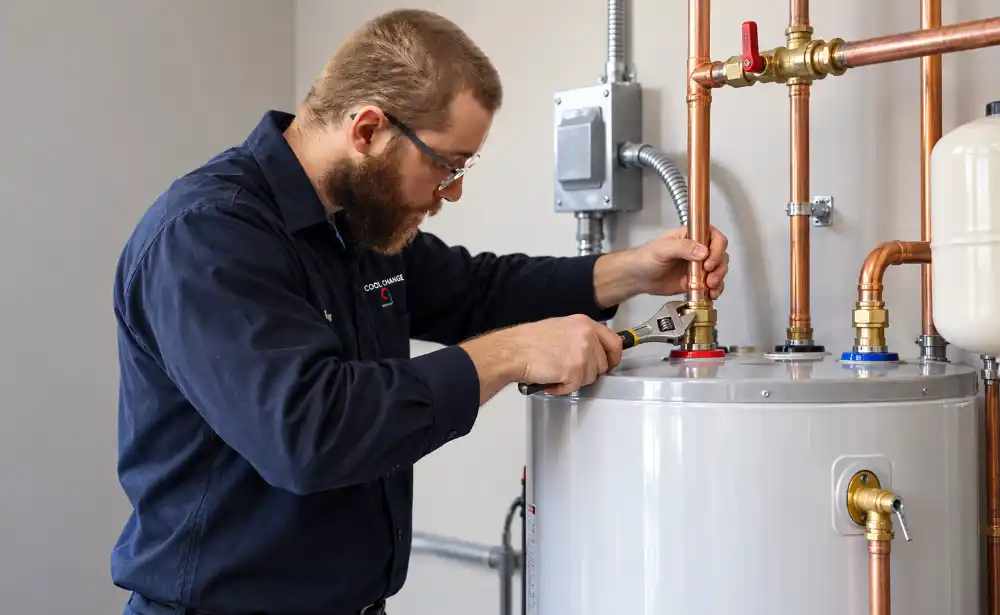
Nobody Thinks About the Water Heater Until the Shower Runs Cold
It’s tucked in a closet, a garage, an attic, or the crawl space, quietly doing its job for a decade. Then one morning the hot water runs out halfway through a shower, or you spot a puddle, or the tank starts making a popping sound like popcorn in the next room.
Suddenly you’re making a decision you haven’t thought about in years:
- Can this be fixed, or is the tank done for?
- Tank or tankless? And what’s a heat pump water heater?
- What size do we actually need for this house?
- How fast can somebody get here before this leak reaches the drywall?
- Who can I call who won’t talk me into the most expensive option?
Hot water isn’t a luxury. It’s showers before work, dishes after dinner, and laundry on Sunday. When it quits, you want a straight answer and a quick fix.
The Heating Experts, Now Handling Your Hot Water
Cool Change has spent years in Triangle homes doing one thing: heating things properly and safely. A water heater is the same work in a smaller package. It needs the right size for the household, a correct gas or electrical connection, safe venting, and a careful install that lasts.
That background matters most with heat pump water heaters, the fastest-growing option on the market. They’re refrigeration equipment, the same technology as the heat pumps we install every week, and they need thought about airflow, space, and condensate that a quick swap-out won’t give them.
We’re family-owned, we live here, and our installers are paid by the hour instead of by the job. That means nobody is rushing through your install to get to the next one.
Hot Water Again in 3 Simple Steps
Step 1: Tell Us What’s Happening: Call or text, and we’ll ask a few quick questions to figure out whether this is an emergency or something that can wait until tomorrow. If water is actively leaking, we’ll talk you through shutting it off while we’re on the way.
Step 2: A Clear Diagnosis and Real Options: We find what’s actually wrong, then tell you plainly whether a repair makes sense or the unit is at the end of its life. If replacement is the better call, you’ll see your options and prices before anything happens.
Step 3: A Careful Install and a Clean Exit: We haul away the old unit, install the new one to code, pull permits where required, check for leaks, and make sure you’ve got hot water before we go. The space we worked in gets left the way we found it.
Customer Reviews
We Have the Coolest Clients in Town
 Rating


Always amazing service! They have the nicest people! We have been with them for about 8 years and always had a great experience! We had Thomas come today to fix our upstairs unit. Thomas did an outstanding job fixing our AC! He was professional, knowledgeable, and quickly diagnosed the problem. He explained everything clearly, completed the repair efficiently, and made sure everything was working perfectly before he left. It’s obvious he takes pride in his work and genuinely cares about his customers. Thanks to Thomas, our home is cool and comfortable again. I highly recommend this company!

My family and I came home from a weeklong vacation to a 85° house. Thomas came out early the next morning and got the system all fixed up and was very professional and helpful. We were very thankful for cool change and the work that they did. Absolute legend.

We bought a new house and just a short few weeks later the AC was not working properly. We called the team, Holden came over, took a thorough look around and explained our options, what to expect and was ao friendly and personable. When the team came to install of a new AC and furnace a few days later, everyone on the team was wonderful. Ryan spent time showing us the new system and explaining everything and what to expect. After the installation, we have had no issues, and thankfully have been a lot more comfortable in our home.


I came home from vacation to my AC not working on one of the hottest weeks of the year. Steph, Tiffany, and JD were so nice and helpful. JD came out right away to help get my system back up and running! He was so kind and talked to me like I was family. I am very pleased with their work and their customer service! 100% recommend this company!

Holden was outstanding! He arrived on time and got to work immediately. He was thorough and explained everything he was doing each step of the way. He stayed until the issue was resolved and made sure our unit was performing optimally. Can’t recommend this company enough! Thanks guys!

Leaving a review after the second time Cool Change has visited us for HVAC repairs. The first time when our heat went out in the dead of winter, and today Holden came out next-day after our A/C quit on July 4th during a heat wave. He was knowledgeable, friendly, and got the job done before lunchtime. I would recommend Cool Change for troubleshooting, repairs, and regular maintenance – trustworthy, efficient, good people!


Had Cool Change come out to troubleshoot our system cooking issues and Holden did an amazing job! He was thorough, detailed, and made us feel confident in the work being done. Would highly recommend Cool Change!

Despite being the hottest week ever, our appt was scheduled in about 12 hours from when I called. Holden arrived at 8:30 am, and spent 2 hours researching then fixing our AC. He described some findings that, although not affecting services now, could be an issue in the future. It was up to us if we wanted them adjusted (we did). He showed up the work he did supported by photos and explained the annual programs to us. Holden was very professional … and our home is cool again before the impending heat dome arrives! Thank you!

Holden was amazing! Very knowledgeable and also talked me through different options and plans I didn’t know about. Fixed our issue in about an hour. The epitome of customer service

Holden did a stellar job as JD and the team at Cool Change always do. Holden was professional, thorough, and explained everything along the way. It’s never fun dealing with HVAC issues, but CoolChange makes the process as seamless as possible.

I had a great experience with Cool Change from beginning to end! My AC went out during 90+ degree weather and they were the only people able to get a technician out same day! My technician, Holden, was very friendly and knowledgeable, explained everything that he saw happening with my system and completed the work that day to get my AC back up and running!

I have used Cool Change for several years and am always very satisfied with their level of service. My technician Holden was very helpful completing my annual HVAC service today. I received a text 30 minutes before he arrived and he was very friendly and efficient. Cool Change has always managed to show up quickly when needed and perform a great job. I will continue to be a customer in the future.

guys came over same day and fixed my ac I will recommend this guy all day long. Holden was the technician, very nice guy!

These guys have been great since Day 1–from initial inspection / quoting, to installation and through regular maintenance, they come off as honest and thorough and I am glad they are responsible for such an expensive item of our home. Most recently, had a great experience with Holden doing our semi-annual maintenance.

Holden was very professional and communicated well throughout the process. He checked our system and cleaned all the necessary items that were causing our AC to not cool properly. Thanks for stepping in and keeping us cool in this NC heat!

We had a great experience with Cool Change Heating and Air. Holden was great and explained everything clearly!

Install Team exceptional. From Ryan the Team Supervisor to Will, Evan and Logan on Install, nothing but first rate work, clean up and efficiency. Very detailed in walking though things before and afterwards. Would definitely recommend to others Cool Change. Professional from Start to Finish.

Holden was amazing! Very helpful as well as knowledgeable. If we ever need any assistance again, we will ask for him specifically. 10 out of 10!

Our AC stopped working suddenly and were able to get on JD’s schedule the following morning. JD was very friendly, professional, and efficiently fixed the issue. He also took time to help explain things us that we didn’t understand. Will definitely be switching our annual maintenance service over to JD’s team moving forward.

Holden did a great job with the maintenance of the HVAC 2 units. Explained in detail his findings and gave me some tips to keep the system running smoothly. He’s very nice and respectful, one of the best tech out there👍

JD did a great and thorough job! He was knowledgeable and efficient with our job. Would use him again!

I called this afternoon about my A/C not turning on. Cool Change came out and got my unit working with in a few minutes. Always a 5 Star experience

Holden was wonderful to work with. He was clear, detailed and professional.

Ryan, Evan, Will & Logan were awesome. They did a great install and were super professional. They thoroughly answered all of our questions. Highly recommend this company 6-8-2026 Holden was fantastic & very knowledgeable. Highly recommend

I can’t say enough about how pleased we are with Cool Change HVAC. Their customer service is tremendous! A frog got into the heat pump unit outside and short circuited the circuit board that controls our unit. When the Trane factory was slow in sending a replacement part, the owner took one out of a unit he had in stock and came and installed it himself. The two times I called needing service they were there within a couple hours each time. They also provided a portable window air conditioning unit at no charge while we are waiting for the repair to take place.

(6/5/26): Today Holden came out to do my annual AC maintenance. He was professional and thorough and you can tell that he really loves his job. Cool Change consistently provides top-notch quality and services and I’m thankful for their attentiveness and curtesy. (4/22/25): Ryan came out today to do my cooling service, which is apart of the annual maintenance. Ryan was extremely friendly and thorough. You could tell that his demeanor was genuine and he knows what he’s taking about. As a first time homeowner, it’s hard knowing who and which companies to trust; however, I have no reservations with this company. Update (1/12/26): I wanted to come update my review to further demonstrate how much I love this company. I was unable to restore wifi to my thermostat after a power outage, so I had to do a factory reset. I called and spoke with Tiffany and Stephanie, who were both very helpful, to help me set up my thermostat again. They connected me to Ryan who talked me through the entire device setup. He was on the phone with me for over 30 mins! Now my thermostat is running smoothly and I have peace of mind. I so appreciate how much this company has gone above and beyond to help me.

Holden did a great job quickly figuring out our a/c issue and was able to fix the problem faster than expected.

Holden did a wonderful job, he did a thorough diagnostic and explained everything in great detail. Would highly recommend cool change heating and air!

Holden did a stellar job with fixing our AC system. He was professional and courteous. Holden was also informative on all the services that Cool Change provides.

Had a great experience working with their team from the front desk to the on-site assistance. Was able to get a same day appointment and everything was clearly explained and thoroughly reviewed before completing the appointment. Highly recommend! Updated review! We have a complicated system and needed some next day assistance to fully resolve the issue. The team was incredibly helpful and had our technician, Holden, back on site immediately. He quickly diagnosed the issue and everything was resolved. Appreciate the timely response and call back appointment. Updated review for a double recommendation!

Holden came out and quickly assessed our issue and fixed our AC after another company did not complete the original repair. Everyone we spoke to at Cool Change was friendly and informative. 10/10 would recommend

Ryan, John and Jacob were an especially professional installation team and we had no problems. Very satisfied with the entire purchase and installation process !

Technician John came out for service. Showed up early and actually waited patiently for me too arrive. He was very professional and thorough and explained everything to me.

John helped us out in a pinch and diagnosed the issue with our AC. Would definitely call again


John came out and diagnosed the problem and fixed it in a timely fashion. Very pleased with the service.

John came out today to fix our upstairs A/C unit. He was very efficient at diagnosing the problem and had our A/C back up and running quickly. We appreciate his professionalism and efficiency. We are very grateful as we are starting into the NC 90 degree summer season Thanks again Cool Change and John.

It was late at night and I was sweating like a dog, I called and Holden was at my door within the hour, I could feel the cool relief as he walked in the door. My AC is now running better than it ever has, he was kind, respectful, and diligent through the process (he’s also good on the eyes) I would highly recommend you calling Cool Change!

Holden was here today for our seasonal maintenance and he was great! Very thorough and nice. Thanks, Holden!

Our AC stopped working this weekend. I contacted Cool Change and they were able to come out the next afternoon. Holden did a great job diagnosing and fixing the problem. The job was done quick and he answered all our questions. Thank you!!

This week, I have had a great experience with the team from Cool Change! They replaced my AC & furnace quickly and efficiently. Their customer service was excellent. Their service went above and beyond what I have come to expect, when I have hired other HVAC companies. May 11- Holden came out to do the annual maintenance and was cordial and professional!

I had John come out here and did the maintenance on our units and did a marvelous job. He was very knowledgeable, and thorough, he explained everything that was going on in a way that made sense to me. This was hands down the best maintenance tech I’ve had. Highly recommend.

My name is Vickie and I just want to comment the john who has been here. Today is amazing. He gave me so much detail about the system and what it may or may not need and he is absolutely charming. Thank you for sending him to me.

I want to say ask for Holden because you won’t regret it, but if I do, then all yoi guys will keep him so busy I may not be able to get on his calendar when I need him!!! LOL! Oh well…ask.for Holden! You won’t regret it!!!


I called Cool Change because they hit high on both quality and competitive pricing when I did an analysis. So, I gave them a try. I am thoroughly happy I did! I had a clogged condensate line to my upstairs AC unit. It kept clogging just wouldn’t stop. Dan, from Cool Change came and recommended we replace the line after he cleared it a few times and it kept clogging. Well, he improved the whole thing as well. My old setup had 9 90 degree bends. Dan routed the new line so there are only 4 and the line slopes now where it dipped before. I couldn’t be happier!

Holden and John just came out to find the cause of my AC unit making a horrible sound. They were informative, professional, clean, and courteous. I learned so much about how the system works which I really appreciate! Wonderful workers and so glad I went with this company!

Great experience with Cool Change. Called them for second opinion and pricing on work quoted from another company. Appointment promptly made for the very next day. Matt took the time to thoroughly review and understand the issue then patiently explained the options. Turned out, this work was not immediately necessary, but when the time comes, Cool Change will definitely get the first call.
 to Schedule Water Heater Service
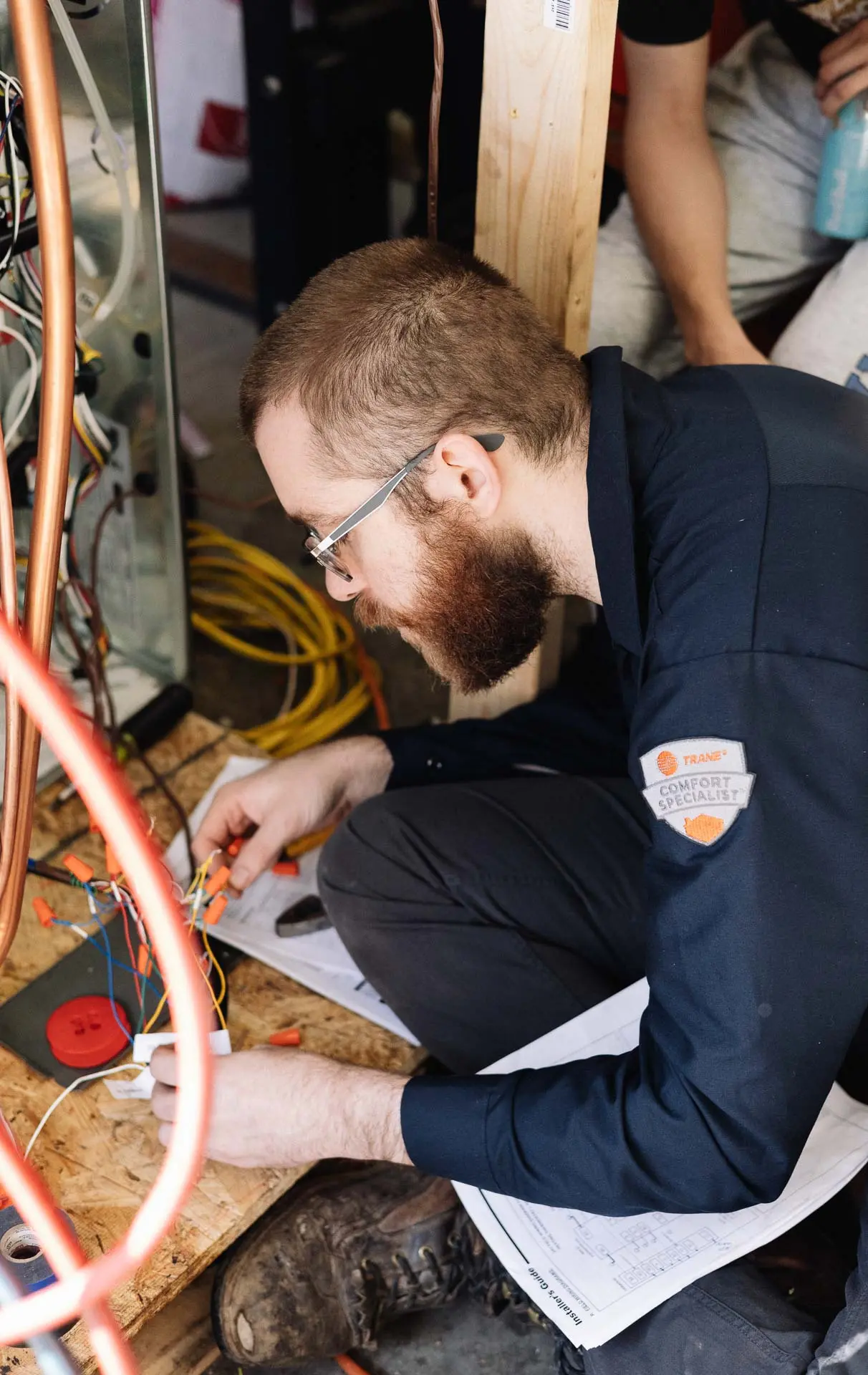
Our Water Heater Services
Water Heater Repair
Not every problem means a new unit. A failed heating element, a bad thermostat, a worn thermocouple, or a stuck valve is usually worth fixing, especially on a newer tank. Expect a straight answer about whether a repair buys you real time or only delays the inevitable.
Water Heater Replacement & Installation
Not every problem means a new unit. A failed heating element, a bad thermostat, a worn thermocouple, or a stuck valve is usually worth fixing, especially on a newer tank. Expect a straight answer about whether a repair buys you real time or only delays the inevitable.
Tankless Water Heater Installation
Endless hot water, a much smaller footprint, and a lifespan that often doubles a tank’s. Switching over usually means gas line and venting changes, so we’ll walk the job first and tell you upfront what your home needs.
Heat Pump (Hybrid) Water Heater Installation
The most efficient electric option available, using a fraction of the energy of a standard electric tank. They need the right amount of surrounding air space and a condensate drain, which is exactly the kind of detail our heat pump work has us thinking about every day.
Water Heater Maintenance
A yearly flush clears out the sediment that builds up at the bottom of a tank, and checking the anode rod can add years to its life. Tankless units need descaling on a similar schedule. It’s a small visit that heads off the expensive surprise.
Water Heaters We Install
- Gas Tank Water Heaters: The familiar choice. They recover quickly, work during a power outage, and cost less upfront than most alternatives.
- Electric Tank Water Heaters: Simple and dependable for homes without gas service, with no venting to worry about.
- Tankless (On-Demand) Water Heaters: Heat water only as you use it. They free up floor space and often last 20 years or more with regular descaling.
- Heat Pump (Hybrid) Water Heaters: Pull heat from the surrounding air instead of generating it, cutting water heating costs dramatically. A great fit for a garage or basement, where the cool, dry air they give off is a bonus in a Carolina summer.
Signs Your Water Heater Is on Its Way Out
- It’s past 10 years old, and most tanks last somewhere between 8 and 12
- Hot water runs out faster than it used to
- Rusty, metallic, or discolored hot water
- Rumbling, popping, or banging noises from the tank
- Moisture, rust, or pooling water anywhere near the base
- Your energy bill crept up with no other explanation
A leak deserves fast attention no matter the unit’s age, especially if yours sits in an attic or above a finished space, where a failed tank damages far more than the tank.
What You Get When Cool Change Does the Job
- A unit sized for your household’s real hot water use, not a guess based on the old one
- Pricing you see and approve before any work starts
- Permits pulled and code followed, including venting, expansion tanks, and safety valves
- Installers paid by the hour, so the job gets the time it deserves
- Old unit hauled away and the work area left clean
- Financing available for qualified homeowners
Frequently Asked Questions About Water Heaters
Most tank water heaters last 8 to 12 years, and tankless units often run 20 years or more with regular maintenance. Water quality, how hard the unit works, and whether it’s been flushed each year all affect the number.
If the tank is under about 8 years old and the failed part is a thermostat, heating element, or valve, repair is usually worth it. If it’s past 10 years, leaking from the tank itself, or needing a second repair in a short span, replacement almost always costs less over time. We’ll tell you which situation you’re in.
That depends on how many people live there and when you use hot water, not just your square footage. A family of four running showers back-to-back in the morning needs more recovery capacity than two people who shower at different times. For tankless, we size by flow rate and how cold the incoming water gets in winter.
It can be, especially if you’re tired of running out of hot water or want the floor space back. It costs more upfront and sometimes needs gas line or venting work, but it heats on demand instead of keeping a tank warm around the clock. We’ll give you an honest comparison for your home rather than a blanket recommendation.
A repair fixes a broken component; a refrigerant recharge specifically addresses low refrigerant levels, usually caused by a leak. We always look for and repair the leak itself rather than just topping off the refrigerant, since a recharge alone is a temporary fix.
Shut off the water supply at the valve on top of the unit. For an electric unit, switch off its breaker. For gas, turn the gas control to “off.” Then call us. If you’re not sure which valve is which, call anyway and we’ll talk you through it.
hat’s almost always sediment that has settled at the bottom of the tank. Water trapped underneath it boils and pushes through, which makes the noise. A flush often clears it, though heavy buildup over many years can mean the tank is near the end.
A straight tank-for-tank swap usually takes a few hours, and we can often do it the same day. Switching to tankless or to a heat pump unit takes longer, since it may involve gas, venting, electrical, or drain work.
The federal Energy Efficient Home Improvement Credit (25C), which covered heat pump water heaters, ended on December 31, 2025. Some utility and manufacturer rebates still exist, and we’ll tell you which ones your unit qualifies for. If another company’s quote leans on that expired federal credit to look cheaper, treat the number with suspicion.
Yes, on all major brands. If we think the smarter move is replacement rather than a repair, we’ll say so instead of selling you a service call that won’t hold.
We Service Homes in the Triangle Region
Our Service Areas
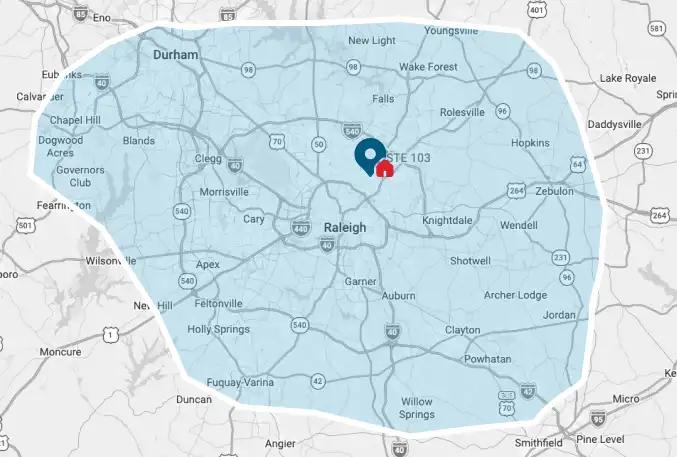
 Apex, NC
- Archer Lodge, NC
- Carrboro, NC
- Cary, NC
- Chapel Hill, NC
- Clayton, NC
- Durham, NC
- Fuquay-Varina, NC
- Garner, NC
- Holly Springs, NC
- Morrisville, NC
- Raleigh, NC
- Wake Forest, NC
- Wendell, NC
- Willow Springs, NC
- Zebulon, NC
Don’t see your area included?
Give us a call or text at 919-457-2494.